Friday, April 1, 2011


Uchū Kaisokusen (Invasion of the Neptune Men) (1961)
JAPAN --- science fiction

Dir: Koji Ota

I'm a Gen-Xer, not a baby-boomer. I did not grow up in the 1950's or 60's. So, looking back on the films and television properties of that era is always interesting for me. I guess my main attraction would be to see how the science fiction genre evolved. In Japan, Tokusatsu (which is loosely translated from meaning "special photography" or "special effects"), became a genre in the mid-1950's following the massive success and inspiration of the Gojira films. Theatres ran serials of a character called "Sūpā Jaiantsu" (Super Giant), which was a success. Of course, Japanese television began to air Tokusatsu shows, the first being "Gekkō Kamen" in 1958. Soon after this hit, a slew of copy cats invaded the airwaves for the children's television market. These shows inspired series that even came to America as late as the 90's with shows like "Ultraman" and "Power Rangers". Of course anything that gets too successful is going to have multiple knockoffs. This film is no exception. Uchū Kaisokusen (Invasion of the Neptune Men) is a pretty cheesy fun children's science fiction film from the cold war era.


This review is going to be biased because it's going off the dubbed American version, and not the original Japanese dialogue, though I doubt it would matter much. Featuring the debut of Shinichi Chiba (later to be named Sonny Chiba of The Streetfighter, Kill Bill fame), Uchū Kaisokusen involves a scientist, Tabana, who's alter-ego happens to be the superhero "Iron-Sharp" (or Space Chief in the English dub). When a group of boys mistake a UFO for a fallen satellite, they are attacked by bullet-helmeted alien beings; it's "Space Chief" to the rescue. After a quick defeat, the aliens rocket back into space and the hero "Space Chief" receives his name from the boys. Soon, a strange electronic band wave causes a series of odd events such as clocks running backwards and trains reversing. Scientists (including Tabana) learn that the wave is coming from the earth and emitted into space. Later, the kids find a left over piece of the alien ship, which eventually lead scientists to pinpoint the source of the wave is coming from Neptune. Of course, this means war, as the aliens plan to invade earth, and only "Space Chief" can save the day.

American producer Walter Manley snatched up this film along with the "Prince of Space" serials, which he edited together into films. The dubbed American actors over the Japanese dialogue has not aged well. Something that has become acceptably standard for the anime or Shaw Bros. kung-fu genre is not all that great here. Maybe it's just me. While this films progenitor, "Prince of Space" serials, had an over-the-top villainous Hitler-inspired Krankor and his minions, the aliens in this film are pretty lame. It also brings up the fact that using WWII file footage in a children's film is kinda strange.

Friday, March 25, 2011


Yogen (Premonition) (2004)
JAPAN
--- horror

Dir: Norio Tsuruta

Anyone who remembers the US television show "Early Edition" will be familiar with the plot and subject matter in this second entry of the J-Horror series of films. Fortunately, this film sticks a little bit more closely to the formula of the sub-genre without straying into some strange areas that fails to even entertain, let alone scare, the audience. Based on the 1973 manga "Kyoufu Shinbun" ("Newspaper of Terror") by Jiro Tsunoda, "Yogen" involves a high school professor (The J-Horror occupation of choice) who becomes involved with a haunted newspaper that foretells the future.

The film opens with a brief shot of an old newspaper obituary of Chizuko Mifune (the subtitles has her last name Kifune). This woman was a real-life self-proclaimed clairvoyant with psychic abilities in the Meiji dynasty (roughly around the mid 19th century to early 20th). According to this film, she killed herself and apparently foretold her own death from a newspaper article. Next we are shown a family driving on a road trip. Professor Hideki Satomi (played by Hiroshi Mikami) is finishing some business on his laptop in the backseat with his young daughter, Nana as his wife, Ayaka, (Noriko Sakai of Ju-On: the Grudge 2) drives them along. Hideki must pull over to a phone booth to urgently email his work. It's here he sees a crumpled piece of newspaper clipping with the headline "Young Girl Killed in Auto Wreck". He opens it further to see a picture of his own daughter. Meanwhile, his daughter is locked in the car seat, as Ayaka tries unsuccessfully to pull her out, she goes to get Hedeki. Out of nowhere, a huge truck slams into the car, and with the daughter trapped in the backseat the vehicle explodes. The couple rush over to the car, but realize it's already too late. Hedeki tries to find the newspaper, but it has blown away.

Three years later, we see Hedeki living alone, divorced from Ayaka, and he has become something of a paranoid distraught recluse. Ayaka on the other hand conducts research experiments with local psychics. She has been trying to collection information from these psychics through the use of nensha (thoughtography) about "the newspaper of terror". One of them, an older woman, expresses apprehension about recounting her own encounter with the phantom newspaper. She gets into a really metaphysical explanation of its possible origin, and confirms to Ayaka it is very real and very deadly. Ayaka brings up a man named Rei Kigata, who named the phenomenon, who will figure in the tale later.

Hedeki in the meantime finds himself having strange psychic episodes, one that even involves him experiencing a kind of deja vu moment. He also is involved with a morose female student of his, who suggests she has had an encounter with the newspaper herself. The paper begins to warn him about her as well, predicting her murder as a knifing victim. Meanwhile, Ayaka gets a strange and disturbing phone call from whom she believes is the old woman, prompting her to go out and check on her. Once there she goes through the house looking for clues of the woman's whereabouts and finds a scrapbook of past newspaper clippings accompanied by psychic photographs, as well as a phone number for Rei Kigata. When Ayaka gets upstairs, she finds the woman dead with a photo clutched in her hand. Ayaka calls Hedeki to set up a meeting.

Later, Hedeki is in class and goes to the student he believes is the next knifing victim, when she reveals she too has seen the phantom newspaper, and warns him it is best to do nothing. That night, Hedeki receives a visitation from the paper, as it slams against the window of his apartment. It contains the article with his student's death. Rushing out to the rescue, Hedeki realizes he's too late to save his student, as he confronts the killer but the girl ends up dead anyway. The next day he meets with Ayaka as she shows him the psychic photograph the woman had is of his face in a newspaper article. They both go to a mental institution where they see a man who had similar psychic predictions was driven insane. Soon, Hedeki's predictions begin to increase, and Ayaka goes to him as they go to find answers from Rei Kigata. They get to his place of residence, your typical shotgun shack in the boonies, and find it abandoned, but much like "Ringu" some clues were left behind via videotape. They watch old recordings of Kigata, as he describes his attempt to thwart the "dead zone" by changing the future. They find out Kigata ultimately became a ghostly figure and perished. Hedeki and Ayaka realize that he's in a catch-22, no matter what happens he cannot escape destiny.

"Yogen" is one of those psychological thriller/suspense forays into psychic phenomenon, with a decidedly horrific bent. I'm not so certain it can be called a horror film outside of some forced moments. IMHO, the story and emotional impact of the opening, may have kinda robbed the movie of allowing the audience to be in for some fun scares. We just witnessed an innocent little girl die for crying out loud. Though admittedly, there are plenty of very creepy moments peppered throughout the film. It feels like the director wants to take us on a melodramatic episodic trip with Hedeki, but realizes the story of Hedeki and his family must be resolved. All in all, this film raised the bar for the series a little.

Friday, March 18, 2011


Jabberwocky (1977)
UK
--- fantasy

Dir: Terry Gilliam

After his years being a part of the Monty Python troupe, Terry Gilliam took his first foray into solo film making. Having come from an animation background and co-directing some of the early Monty Python feature films with fellow alumni Terry Jones, he was well prepared. The evidence of things to come is here in the film "Jabberwocky". Gilliam pokes fun at the "dark ages" through the use of Lewis Carroll's nonsense poem "The Jabberwocky" from the book "Alice Through the Looking Glass".


The film opens a lot like a horror film, with a poacher (Terry Jones) in the woods stalked and killed by the Jabberwocky. We then follow our hapless hero Dennis Cooper (played by Python's go-to leading man Michael Palin), the son of a barrel maker, who instead aspires to be a stock taker. When his father passes away, practically cursing Dennis with his last breath, he goes off to the city for work. Before he leaves home, he stops to assure his fair love, a very crude rubenesque girl named Griselda Fishfinger and her uncouth family, that he will return to take her in marriage. With that, Dennis is off to find employment.

We next see the king in his bedchambers, and as Gilliam and the Python troupe are notorious for, they show the quite unsightly shady side of the powers that be to comedic and absurd effect. Though done in this very Brit humour style, it still rings all too true. King Bruno the Questionable, son of Olaf the Loud, et cetra, must not only contend with the common folks pining for food and work, but for the fear of a ravaging monster stalking the countryside. His chamberlain, Passelewe, suggest a tournament to the death for the hero to be tasked in finding a killing the monster. He goes to tell the princess with his plan to give her over in marriage to the champion. Meanwhile, Dennis can't even enter the city. Left out in the cold, rainy outskirts in the forest, Dennis sees some vagrants enjoying some soup. He offers to collect some firewood from the forest in exchange for a portion. However, Dennis runs into another vagrant (Gilliam himself) who was also kicked out of town earlier in the film, claiming to be in posession of a diamond, which is really just a rock. When the man nearly tries to bludgeon Dennis, he's suddenly rescued by none other than the Jabberwocky, which snatches up the vagrant. Dennis escapes with his life.

In the morning, Dennis manages to get into town. He arrives just in time to witness the formal announcement of the joust competition which will reward the victor the hand of the princess in marriage and half of the kingdom. Dennis stumbles upon a job with a squire of a knight participating in the tournament, which goes from bloody battle to hide-and-seek. Dennis goes from one crazy adventure to another. He is accused of adultery by his boss' landlord, almost burned alive by religious fanatics, and when the real squire goes to play hanky panky with his boss' wife, he sends Dennis in his stead.


As they depart on their quest, they happen to run into some bandits harassing the Fishfinger family. They rescue them from the bandits, but the Fishfinger family isn't all that grateful to Dennis. At this point, Gilliam also infuses some religious criticism as we see the church plotting to save the monster because it has been good business. They send their own Black Knight out to stop the champion knight from completing his task. The Black Knight easily kills the champion knight, leaving his squire, Dennis alone to fend for himself, that is until our titular character returns for a final appearance.

"Jabberwocky" is a silly comedy to say the least. Gilliam's film does somewhat stick close to Carroll's vision, as the poem is recited in certain scenes. There's also a scene during the knight's tournament where Passelewe asks his king something and addresses him as sire and they get into how they word should be used. This is something that Carroll addressed in his book as well. Special effects technician John Brown (Willow, Sleepy Hollow) and the uncredited work of Valerie Charlton (Dark Crystal, Temple of Doom) does an impressive job of creating the titular beast on a low budget. Though it doesn't favor the art of John Tenniel, I was actually quite surprised upon first viewing of this film that they did such a good job of it. Considering nowadays we're so used to pitiful CGI characters, it was refreshing to see just a guy in a creature suit with puppetry done correctly for once. That, of course doesn't look all that real, at least is interacting with the actors on screen. It helps to know Brown worked on the UK marionette classic show "Thunderbirds". I was expecting to see a better movie from Gilliam considering he had plenty of practice beforehand. Gilliam's visual style is all over the film, but the aesthetic one expects is not quite here. "Jabberwocky" is an okay first film effort from Gilliam, but in comparison to his following features, it pales.

Friday, March 11, 2011


They Came From Beyond Space (1967)
UK
--- science fiction

Dir: Freddie Francis

Amicus Studios enjoyed being a contemporary rival of the famous Hammer Studios during the 60's and 70's. While Hammers forte remained in remaking classic gothic horror films, Amicus went the route of producing anthology horror films. However, they did make a few forays in the science fiction genre, most successfully with the Peter Cushing Dr. Who feature films. I highly doubt this film would be boasted about, but it is an interesting piece. Of what exactly, is for you to decide.

Based on the 1964 novel "The Gods Hate Kansas" by American author of film novelizations Joseph J. Millard, "They Came From Beyond Space" tells the tale of several meteorites that crash land on earth in a "v" formation in the rural English countryside of Cornwall. Soon astronomy official, Richard Arden, contacts the one man they claim can solve the mystery, a Dr. Curtis Temple (played by American actor Robert Hutton). Temple is prohibited by his doctor to go on the investigation due to his recent recovery from a motorcycle accident, which gave him a metal plate in the head. He does, however, send one of his trusted assistants and apparent love interest Lee Mason.

Lee travels out to see the meteorites for herself, but during their study, the group is instantly is mentally invaded by an alien entities. Back at the lab, Dr. Temple and an associate discover these meteors originate from the earth's moon. The aliens now inhabiting the scientists bodies immediately go to a local bank to acquire funds for their mission. They send Arden to go pick up Temple and his associate, but its really of course to take their bodies of which they only succeed with one of them. Temple immediately sees that something very awry is happening, and he goes to find and question Lee for himself at the Roberts farm. Temple is surprised upon arrival that it has practically become a demilitarized zone quartined complete witg electrical fences and armed soldiers.

After meeting with Lee, Temple sees she is a totally different person. This leads Temple to desperately seek out Lee and Arden, to which after cornering her, she shoots him with some kind of raygun. He wakes up in the home of a gas station addentant, and soon after leaving to continue his search, he runs into a government agent named Stillwell. Things take a deadly turn, when Stillwell goes to make a call in the phone booth and becomes infected with a virus that covers the victim with spots of blood as well as anyone who comes in contact with a carrier. When concerned onlookers surround Temple and Stillwell, they all become infected by this "crimson plague" (possibly inspired by red weed from War of the Worlds). Curiously, Temple is once again immune to this as well.

Temple notices the female gas station attendant in the crowd of onlookers, but seemingly unaffected by the plague. Later at home, he catches a news report on the incident, but is soon paid a visit by another government agent named Williams. Temple notices, after he leaves and goes to his car, that the gas station attendant again is in the drivers seat. He tries to track her down by returning to the gas station, except he finds a bunch of heavies determined to make him mind his own business. Temple stakes out the farm later that night and witnesses a rocket launched from a immersed launchpad in the swamp. With unwavering determination, Temple returns to the farm and goes on full-on assault against the invaders in an attempt to infilitrate the farm. Once he gets in, he has an uncomfortably long fist fight with an invader, but before long he prevails only to find a collection of plague victims bodies frozen in some kind of containment area. Eventually, he is captured by the invader Arden.

They allow him the courtesy of imprisonment, as the invader Arden explains what is really happening. He explains to Dr. Temple that they are trying to bury the "crimson plague" victims on the moon where they won't be a threat to humanity. Temple highly doubts the story, and quickly devises an escape plan based on a loophole he discovers in their little security system. Just in time too, as the invaders have no intentions of keeping him alive.

Getting rid of Arden, Temple goes directly for Lee Mason and just barely gets them out of there alive. He takes her to a colleague named Farge, where they realize they have to find a weapon against these alien invaders. He and Farge construct a colander for a helmet to protect him, since Temple has been protected by that silver plate in his head. They eventually free Dr. Mason from the alien entity and ultimately return to the farm to confront the beings from outer space, and solve the answers to rest of their questions.

"They Came From Beyond Space" is a fun Saturday afternoon movie to watch that doesn't insult your intelligence too much. If the title sounds familiar, yeah, this film shares some similarities to the American 50's B-movie "It Came From Outer Space". The score, provided by James Stevens, is clearly the Sixties bebop you'd expect from a film from this era. It comes as no surprise he also contributed to Ed Woods' dubious classic "Plan 9 from Outerspace". I think this film might've been a decent cult classic had it not taken itself so serious. Besides being clearly inspired by the much better executed film "Invasion of the Body Snatchers", the plot has been rehashed on reguar sci-fi tv shows, that its originality is all but lost on modern viewers. This is exactly the kind of film Tobe Hooper was paying homage to in his film "Lifeforce" which I pointed out in my review of that film.

Friday, March 4, 2011


Ringu (Ring) (1998)
JAPAN
--- horror

Dir: Hideo Nakata

The film that began the international J-Horror sensation and till this day inspires countless copy cats in the popular sub-genre of horror cinema. The ghostly woman with long black dishevelled hair has been a traditional fixture in Japanese folklore for centuries, but the stark difference with the film "Ringu", is its marriage with modern technology.

The film could be seen as an essay in a nations regret in partaking in the creation of a kind of Frankenstein's Monster with advanced technology. Thanks in part to Reganomics in the 1980's, the world stood by as many leading technology firms and businesses outsourced to Japan for labor and taxation reasoning. Consumers in return bought up their merchandise such as Nintendo, Sony (who is credited with the prototype of the videocassette), Fujifilm, Casio, et al. Even today Japan looks like a futuristic wonderland. The question is, do the Japanese harbor some underlying fear or regret in that ingenuity? The answer is, probably, and as this film poses, the future may not be so much of the threat as that of the past.

"Ringu" has been adapted from the 1991 novel of the same name written by Koji Suzuki. It takes place in contemporary Japan and follows a reporter's investigation into an urban legend of a cursed videotape, that turns out to be all too real. The film opens with two teenage girls, Masami and Tomoko, gossiping about a local urban legend until Tomoko tells her friend that something similar happened to her and her boyfriend earlier that week. The legend goes, while visiting Izu, a boy wanted to record a tv show while he went out to play. When he returned to watch it, he realized the channels were different, and there should have been nothing recorded since that channel did not exist. When he did play it back, a strange woman appeared and told him he would die in one week. Tomoko and her boyfriend were also in a cabin in Izu when they watched a videotape. When the phone suddenly rings, the girls get scared, and Masami boldly goes to answer. They learn it's only Tomoko's mother, and their fears are relieved, until Masami leaves. Alone, Tomoko hears the television come on in the living room by itself, at first she's startled but goes to turn it off. Soon however, she meets her expected fate. Now investigative journalist, Reiko Asakawa, questions some school girls about the legend. They of course all have those "a-friend-of-a-friend" type testimonies, but Reiko picks up on the fact that Izu is the tie that binds. She and her young son attend the funeral of their cousin Tomoko, when she confirms the deaths of Tomoko's group of friends who all rented a cabin in Izu and died. Reiko returns to Tomoko's room, and finds a receipt from a local photolab. She picks it up and finds pictures of the kids on their vacation, except one where all the faces are warped. She realizes all clues are pointing to that cabin in Izu, so she decides to take a trip out there herself. After checking in, she discovers the infamous videotape in the form of an unassuming unmarked videocasstte. She pops it in the player and watches it.

We see the tape contains a series of very strange images, and immediately after viewing it, she sees the ghost of Sadako in the reflection of the television screen. To make matters worse, the phone rings and she answers to hear a buzzing sound. Startled at the revelation that this legend is all too real, she seeks the help of her ex-husband Ryuji, who's now a university professor. She tells him to take a snapshot of him with a Polaroid camera and sees her picture has been distorted like the kids' photo. Ryuji watches the tape, but he doesn't receive a call. He tells Reiko to make a copy of it for him for further study. Ryuji and Reiko thoroughly study the videotape, putting the pieces of the images together and discover this may have been created by someone from someplace called Oshima island. As the couple begin to unravel the mystery, they find out the source of this was a psychic girl named Sadako who died in a well on the island. Now they must find a way to evade the curse, especially when their young son has also watched the tape and time is running dangerously short for them all.

Sadako's tale is an amalgam of two very famous ancient Japanese ghost stories. One being the Yotsuya Kaidan and the other being Banchō Sarayashiki. Though the film is essentially a ghost story with a somewhat technological facet, it doesn't feature overtly high-tech infrastructure, or the spooky old house. In fact it seems to go out of its way to feature exactly the opposite from both degrees with either wide open isolation or congested interiors and exteriors. This serves as a contrast to all the cellphone, video cassettes, and Polaroid cameras utilized throughout "Ringu". There are touching moments with the son and his grandfather and some melodrama between Reiko and Ryuji. The J-Horror tropes were all first established here with the ancient ghost story, evil side of technology, cursed school girls, a single mother, and a doomed college professor.

On the sound design front, one could write an essay (as I'm sure many have) on that aspect of this film alone. It too has gone on to be highly imitated and found its textural construction in nearly every kind of J-horror since. Sure, there are the typical horror movie jump-back sounds to startle you, but underlying that is a whole storytelling device that's somewhat operatic; from the low almost long-distance train whistle for the timestamps, the buzzing insect-like noise of the phone calls, to the crackling white noise positing of Sadako's stalk. It's interesting that this film was actually directly inspired by two Western region films. Suzuki claims he was inspired to write the book after seeing the Tobe Hooper haunted house film "Poltergeist". Nakata suggested that he drew inspiration from David Cronenberg's "Videodrome". "Ringu" is a classic horror film in an era that relies increasingly on shock and gore, which lead to the appeal of J-Horror films. The film has its shortcomings like the lack of further explanation of Tomoko's or that the main characters (particularly Ryuji) clearly appear to possess psychic abilities. The film is a slow burner that allows the suspense to and mystery to build one step at a time. It is unfortunate not enough films today allow the audience to use their own intelligence to figure things out. "Ringu" was followed up by a couple of sequels that, of course, failed to engage and innovate the genre like this one little masterpiece.

Friday, February 25, 2011


La Vendetta Di Ercole (Goliath and the Dragon or The Revenge of Hercules) (1960)
ITALY/ FRANCE
--- fantasy

Dir: Vittorio Cottafavi

It's back to the peplum genre. To the time of ancient Greece where we find yet another adventure of our resident hero Hercules. This time, however, he's been rechristened Goliath and recasted to a new American bodybuilder named Mark Forest (real name Lou Degni) in his debut performance. Producer Joe Levine (Hercules/Godzilla) owned the rights to the name "Hercules", so this film's hero is now "Goliath". In addition to this, AIP even shot additional material with the help of the Italian crew. To prepare you or save you time, this film drops in the quality department about, oh, 25-30%. Those familiar with this genre should know this is nothing new. These films are replete with cheesy entries, assuring the MSTK and Something Weird Video folks stay in business for a few more years. This review ends up being more about the dubbed versions, as apparently the original negatives of the film were lost.

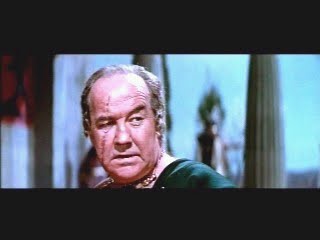
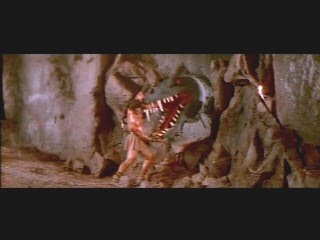
In this outing, Emilius the mighty (nicknamed the Goliath of Thebes or Pheobes but I will stick with Thebes) must find the blood diamond, which was stolen by King Eurysthesus a man bent on usurping Thebes for himself and killing Goliath. To accomplish this, Eurysthesus (played by Hollywood heavy Broderick Crawford) hid the blood diamond in the cave of horrors. The film opens with a rock cimbing scene, where we find Goliath has found the cave and no sooner battles what appears to be a fire-breathing Cerebus. If you haven't stopped watching after this laughable scene, we are introduced to the scar-faced Eurysthesus, who gloats like a Batman villian about his impregnable trap for Goliath. His counselor and allies want proof of Goliath's death before they take Thebes. Meanwhile, Goliath treks deeper within the cave to finds the skeleton of a man and the dragon who most likely did him in. Commanding him to continue on for the blood diamond, Goliath obeys the word of the pagan goddess.

Illus, Goliath's younger brother, secretly goes to meet with Thea who stays in the courts of Eurysthesus. He plans to return to meet her, but the soliders have another plan for him. Meanwhile, Goliath battles a Maurice Sendak looking Man-bat creature (i.e. expendable stuntman in a costume), just as he finds and secures the blood diamond. Back at the Eurysthesus' court, his shady counselor Tindaro (who strongly favors a 60's era Star Trek Romulan) plots to invade Thebes and soldiers capture Illus on his way out from sneaking kisses from Thea.

When Goliath returns home, he is disturbed to learn of his brother's intentions with Thea, as it was her father who killed his parents. Before long, Eurysthesus finds that this development can be used for his own plans to take over. He plots to have Illus poison Goliath, but the slave girl, Alcinoe, who he sent to do the job betrays him. Eurysthesus even goes so far as to wed Thea for himself. Eventually, Goliath's brother is abducted and snet to die under the foot of an elephant, that is until Goliath comes to the rescue. Things only worsen when they get a prophecy about his Illus ruling and a centaur kidnaps Goliath's wife Dejanira. He takes her to Eurysthesus, where he holds her captive in the cave of horrors. Ultimately, this typical peplum's convulted plot ends up making less and less sense the more you think about it. In addition to the bad special effects and laugh out loud scenes such as Goliath wrestling some dude in an unconvincing bear suit, this is still surprisingly entertaining.

There you have it. Another Velveeta-flavored peplum yarn. Well other than renaming the titular hero after a biblical Philistine villian, and having plotholes as big as the caves in this film, this film is something slightly enjoyable to watch. The cinematography is just bad, though you can tell they were trying to emulate Bava's style in select scenes. The low budget special effects have to be seen to be believed, and that's about it. "La Vendetta Di Ercole" is simply another Saturday afternoon matinee flick. Enjoy.

Friday, February 18, 2011


Heavy Metal (1981)
CANADA
--- science fiction/ fantasy/ horror

Dir: Gerald Potterton

Fond memories of teenage years (though I wasn't one when this was released), "Heavy Metal" is a cult classic of the highest proportions. It is at once a collaborative, rebellious, raucous work of art toiled over a span of years and countries. For many an American GenX teenager, "Heavy Metal" holds an interesting fond place in our hearts. It was made in a time where animation was deliberately taking risks with more adult fare in cinemas like Ralph Bakshi's x-rated "Fritz the Cat", the dark age of Disney films, even "Transformers: The Movie" dared to kill off Optimus Prime.

National Lampoon magazine had bought North American distribution rights to a French magazine named Métal Hurlant ( translated roughly "screaming metal"). Renamed Heavy Metal, the magazine started in the 1970s and blended everything from dark fantasy, horror, science fiction, and oh yes erotica. Artists from all over the globe contributed their own stories and artwork such as H.R. Giger, Richard Corben, Moebius, and many many more. At this time, National Lampoon magazine saw the success on the big screen with a spinoff film "National Lampoon's Animal House" and it wasn't long before the idea to make a film based on Heavy Metal came to fruition. Produced by Canadian filmmaker Ivan Reitman, the film was to be animated by artists from France, Canada, the United States. The idea to make the film an anthology cemented the highly collaborative and unique hodgepodge style of Heavy Metal Magazine, as they adapt popular strips from that were featured in the magazine, as well as creating some new stories.

The title sequence opens with a story by late screenwriter Dan O'Bannon called "Soft Landing" which shows us an astronaut descending to earth in a 1960 corvette. This basically bridges the titles to the framing story of the film "Grimaldi", where we find the identity of the astronaut as Grimaldi coming home to his young daughter. He's also brought home a glowing green orb in a box. The orb ends up killing the Grimaldi as his daughter looks upon it in fear, just as the orb presents himself as "the sum of all evils." Called the Loc-Nar, the orb begins to show her the following tales in the film.


Based on Spanish artist Juan Giménez's "Harry Canyon", this vignette takes place in a dystopian New York City in the year 2031, focusing on the cynical taxicab driver, Canyon, who narrates. Inspired by a film noir, he reluctantly gets involved with the daughter of a scientist who has unearthed the mysterious Loc-Nar. When he is gunned down by a Casper Gutman-esque gangster, the girl is on the run and Canyon is in the wrong place at the right time. Helping her out, the daughter bargains with Canyon to give the Loc-Nar up to the gangster and split the spoils with him. In the end, Canyon realizes he should've never got involved in the first place. This piece has been highly influential, as you have seen many dystopian futurescapes since, in films such as "Blade Runner" or "The Fifth Element"; they have their genesis here.

The next segment (probably my favorite) is based on Richard Corben's popular strip "Den". Voiced by John Candy, nerdy teen Dan, finds the Loc-Nar and experiments with it for his own personal science project. During a lightning storm this inevitably teleports him to another dimension where he becomes a beefy bald grown man. Now as Den, he espies a group of cultists sacrifice a well-endowed young woman to a god called "Uhluhtc" ("Cthulhu" spelled backwards). After a safe rescue, she tells Den she's in reality Katherine Wells from the British colony of Gibraltar. Soon monster minions of Ard interrupt the couple's sexual acquaintanceship. They are brought to Ard, an effete immortal who puts Katherine in suspended animation and forces Den to steal the Loc-Nar from the Queen who tried to sacrifice Katherine in the first place. Den and Ard's beastly henchmen must infiltrate the Queen's palace and ultimately rescue Katherine. This is actually the second appearance of the character Den in animation. He originally appeared in a 1968 self-produced animated short called "Neverwhere" by creator Richard Corben himself. The backgrounds of this piece live up to the Corben art style, but the art (outside of the gratuitous nudity) don't capture Corben's thick pock oiled art much at all.

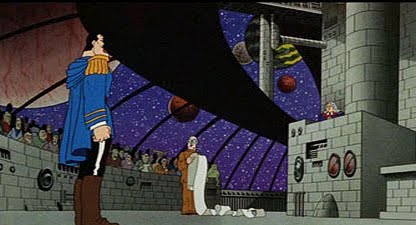
The next vignette is a comedic trip into outer space with Bernie Wrightson's classic ne'erdowell "Captain Sternn". We catch up to Lincoln F. Sternn on trial for a laundry list of violations against the law. Sternn insinuates that his attorney that he has an "angle". That angle turns out to be his witness for the defence, a scrawny guy named Hanover Fiste who soon transforms into a hulking brute who chases after Sternn. Turns out, in the end, Sternn really does have an angle. There was supposed to be a segment between this and the following one called "Neverwhereland" by animator Corny Cole which showed the Loc-nar landing on prehistoric earth and being responsible for all the evils throughout time. This was deleted for time management, but can be seen on the dvd.

"B-17" is basically a short EC Comics style horror tale involving a bomber pilot and his crew, when after perishing in a gun fight, suddenly become undead. This one was written by Dan O'Bannon and was originally to showcase a pilot against gremlins. The next segment is another comedic tale called "So Beautiful, So Dangerous" based on Angus McKie's story which first appeared in the October 1978 issue. This one is about an alien spacecraft abducting humans, and a very sentient robot putting the moves on a woman. This sequence is purely played for laughs before taking us into the final piece.

"Taarna" is an original story based loosely on French artist's Jean 'Moebius' Giraud comic strip "Arzach" which first showed up in the pages of Métal Hurlant in 1974. This tale begins with the Loc-Nar crashing into a volcano. The natives nearby are overcome by the Loc-Nar lava, but are mutated into vicious barbarians and as they go out to destroy a peaceful village. The village elders desperately seek their last refuge in summoning the lone survivor of a warrior race called, the Taarakians. They summon Taarna, a silent beautiful young woman equipped to avenge the peaceful race and seek out and destroy the ruthless mutants responsible. She heads out with her pterodactyl to the mountains to put an end to the mutants tyranny, and comes face to face with the source of the evil; the Loc-Nar. The film ultimately ties up with the revelation that this whole frame story with Grimaldi's daughter is tied to Taarna.

"Heavy Metal" is really an animated adult fantasy to end all adult fantasies. There really hasn't been any equal, and more than likely, will never be. Though a sequel was made years later, it still lacked the brash vision of this film. The fantastic score is provided by the legendary Elmer Bernstein, in what many of his fans proclaim is actually the absolute finest film score he ever did. The needle-dropped soundtrack is anything but in the genre of heavy metal, but peppered with soft rock and prog rock performers. The only real metal in the film is from Black Sabbath. Overseen by Ivan Reitman, you can see his influence throughout the film. Besides hiring composer, Elmer Bernstein, he made sure plenty of Second City performers got work in this. Not just in voice acting, but it almost seems the visuals were inspired by performers like Martin Short, Eugene Levy, and Harold Ramis. For further confirmation watch a double feature of this film and "Ghostbusters" back-to-back and view the similarities, especially in the climatic cityhall scene of GB and the press conference scene in the segment "So Beautiful, So Deadly". Currently, there is a live-action Métal Hurlant tv series airing in France apparently under the name "Metal Howling" or "Heavy Metal Chronicles". News also confirms that directors David Fincher, James Cameron, and Guillermo Del Toro plan to produce a new live action anthology film.