Showing posts with label France. Show all posts

Friday, December 9, 2011


La Planète Sauvage (Fantastic Planet) (1973)
FRANCE --- science fiction

Dir: René Laloux

Many films have juxtaposed a subjugated human race under the heels of some alien (or other creatures) rule to stress some social commentary about slavery, religion, or just simply social class systems in general. We've seen this conceit in a myriad of forms such as Jonathan Swift's "Gulliver's Travels", Edgar Rice Burrough's "John Carter of Mars" series of books, L. Ron Hubbard's "Battlefield Earth", or "Planet of the Apes". In the film "La Planète Sauvage" (Fantastic Planet) we are shown a similar visionary nightmare in the package of a science fiction tale on these dark aspects of humanity's greatest failings.

Based on the 1957 book "Oms en série" by French science fiction novelist Stefan Wul, the film follows a young human boy called an "Om" (french word "Hommes" that means "man") who is left orphaned after alien children accidentally kill his mother while playing with her. The aliens are called Draags, who are giant red-eyed blue-skinned beings with webbed ears, yet are highly civilized. Immediately after the boy is left alone crying, a Draag dignitary's young daughter, Tiva, finds him and adopts him as her personal pet. She eventually names him Terr. He observes the strange alien landscape, as he grows up confined to a specially created collar complete with a wristband controller belonging to Tiva. Tiva truly treats Terr as a favored pet, and even has him with her during her learning sessions through the use of an encyclopedic computerized headband which trains her by feeding information directly into her mind. When her parents begin to notice that Terr has been using the headband with and without Tiva, they ban her allowing him to be present while she is learning with it. However, as she begins to grow out of adolescence, Terr becomes more dependent on educating himself from the computer headband and ultimately escapes out on his own.

Terr drags the headband with him as he is out in the alien wilderness. He eventually meets up with an Om woman of the "savage" Oms. When Tiva tries to recall Terr through the collar, the woman help him get set free from it. She takes Terr to her tribe located in a tree and they instantly label him as a domesticated Om. When he observes that they too could use the information from the learning headband, some of the tribe of course outright disdain Terr's gift of Draag knowledge. Eventually learning of a "fantastic planet". They force him into a combat ritual, in which he prevails as the victor. The tribal elders allow Terr to join their tribe. Terr observes the Oms living condition and how they have adapted to life in Draag world. He even is introduced to a band of evil Om bandits who live in their own tree and steal of the Om tribe he has befriended.

Later some of the educated Oms uncovers the Draag plan to "de-Omised" their local village based on seeing some graffiti they were able to interpret. Terr takes it upon himself to warn the tribe of Om bandits, but they do not heed his warning, and their leader, an old woman, has him locked away. Soon after, the Draags do strike using gas pellets, killing a high majority of Oms. The old woman frees Terr, as they all narrowly escape with a remnant of the people. One of the Draags witness them escaping and goes after them crushing them like insects. The Oms fight back as they actually take down and kill the Draag. The old woman leads the remnant group out to a safe haven, namely an old rocket depot, and eventually Terr leads the very large tribe on a mission to the fantastic planet. After the death of one of their own, the Draags have another council meeting, and they are not far behind the Oms, as they discover the secret behind just what the fantastic planet is.


Although I certainly wouldn't recommend "Fantastic Planet" to just anyone, it is something interesting to watch. The film is animated in a slightly strange cutout animation style reminiscent of Terry Gilliam's interstitials in "Monty Python". There is also the unavoidable phallic and organic imagery throughout the film of the alien landscape, successfully creating an uneasy surreal atmosphere. Laloux collaborated with famed French artist/ writer Roland Topor for this feature length film. Personally, this film is far overdue for a live-action adaptation with the right director.

Friday, October 14, 2011


Orfeu Negro (Black Orpheus) (1959)
BRAZIL --- fantasy


Dir: Marcel Camus


This fine entry of a fantasy film comes from the country responsible for Cidade de Deus (City of God) and the old Coffin Joe horror films; you guessed it Brazil. Except this is quite some time before the drug wars and such. In what is quite possibly the oldest of all tragically beautiful love stories, "Orfeu Negro" weaves a tale of music and the power of love. In the Greek myth Orpheus was the son of muse Calliope who married a woman named Eurydice. His wife was being taunted by a satyr one day and fell into a vipers nest. When Orpheus found her, he played music for her that made the gods weep on end. Eventually they advised him to travel to the underworld where he played the music for Hades. being overwhelmed by his music, they allowed him to return to earth with his wife, under the condition she was to follow behind him and that he may not look back until they arrived. However, when they do reach the upperworld, he hurriedly looks back, but she had not stepped foot yet and she is lost forever.

"Orfeu Negro" transplants this classic love story from ancient Greece to contemporary Rio de Janiero. Orfeu (Breno Mello) is a trolley conductor, who has a gift for playing the guitar. He's due to marry his beautiful, yet (for lack of a better word) bitchy fiancee Mira. However, he comes across Euridice (Marpessa Dawn) who rides to the last stop on the trolley in search for her cousin. She is directed by another conductor, appropriately named Hermes, to her destination. Meanwhile, Orfeu and Mira go to get the official paperwork for their marriage license. Orfeu even gets somewhat of a premonition of things to come, when the clerk asks Mira if her name is Euridice, like the old, old tale of tragic romance, he says. He admits to just joking to Mira, and she's so consumed with herself, the upcoming marriage, and Carnaval, she blows it off, but keeps an eye on him from then on out.


Euridice arrives atop the hillside of town to meet up with her cousin Serafina, who has just spent her savings on a costume for Carnaval. They discuss what she's doing there, when Euridice confides she ran away from home from fear of a man who is attempting to kill her; death. Serafina says she is perfectly safe now. When Orfeu gets his guitar out of the pawn shop, he escapes the arm of his fiancee and begins to play with the local children who believe he can wake up the sun with his music. During his child-like time with them and teaching one of them how to play guitar, unbeknownst to him he's serenading Euridice who is listening on from the neighboring shack belonging to Serafina. When he ducks out to hide from Mira's girlfriends, Orfeu's plans quickly change when he discovers the pretty new visitor is named Euridice, his destined lover.

He spends most of the film protecting her from death (the satyr), a man who appears clad in an abstract skull mask and black costume. However, fate finds them out, as the tale begins to weave out exactly as the ancient legend did. She eventually tries to escape the man and ultimately falls victim to him under her own circumstance. Orpheus loses her, but is given one final chance during a religious ceremony.


"Orfeu Negro" is a classic and beautiful love story, the best of which usually don't always end in happily ever after. The film uniquely pays careful attention to the homages to the greek legend with familiar characters such as the Satyr, Hermes, Cerebus, and Charon the ferryman of the river Styx. Like most films made in the 50's it features the ubiquitous musical sequence. The cinematography is vibrant and colorful. Even the scenes of Euridice's death is bathed in red light. In fact one of my favorite images in the film is  with Orfeu and the janitor decending a long spiral staircase, in which the bottom is again bathed in bright red light. Many film critics loved "Orfeu Negro", but deemed it a French film made in Brazil. Fair enough. However, I'm certain 3/4 of the product including the mostly Afro-Latin cast, the boss nova bumping soundtrack from Antônio Carlos Jobim and Luiz Floriano Bonfá, and local film crew contributed to its success. I can't see much French influence, especially new wave, on this film. Though I'm sure if made on the nickels and dimes of Brazilian money it wouldn't look and feel nearly as polished as it is. According to Barack Obama, via his book "Dreams of My Father", he wasn't so impressed with the film either.

Friday, September 23, 2011


The Secret of Kells (2009)
IRELAND/ FRANCE/ BELGIUM --- animation/ fantasy

Dir: Tomm Moore

A group of talented animators presented this Oscar nominated animated fantasy film from Ireland, spotlighting the creation of the Book of Kells. The "Book of Kells" is basically an illustrated interrpretation (Insular Art) of the Four Gospels (Matthew, Mark, Luke, and St. John) from the Christian Bible. They are very old, dating back to the 8th century, and were painstakingly designed with various forms of ink, precious stones, and gold.

Though fictionalized, the film tells the story fairly close to the historical legend, being set in middle ages of Ireland, as our young protagonist, Brendan, is an apprentice in an Abbey. The monks regale young Brendan with tales of the "magical" book of Iona, as he wishes himself to be an illuminator. As the multi cultural group of monks await the arrival of a brother Aidan of the island Iona. He is an illuminator, who has constructed a book of kells called "The Book of Iona". When the island of Iona was attacked by a band of ravaging vikings, Aidan had to protect the book from being destroyed, and fled the island with his white cat Pangur Bán. Meanwhile, Brendan's uncle, Abbott Cellach, has put all effort into the building of a wall to protect the Kells from the inevitable invasion of the vikings. If you want to see a truly graphic form of these kinds of invasions, watch Andrei Tarkovsky's film "Andrei Rublev".

Upon Aidan's arrival (who looks like a cross between Willie Nelson and George Carlin), Brendan inquires him of the book of Iona. When Abbott Cellach spirits Aidan away to work on the wall, he's tasked with feeding Pangur Bán. Brendan, however, accidentally overhears Cellach and Aidan in a heated discussion about the wall, in which Aidan admits the best solution when the Vikings get there, is to run. Abbott Cellach is determined to stand by the fortified Kells, and leaves Aidan to his illuminating. When Aidan returns to the scriptorium, he tasks Brendan with finding gall nuts for ink in the wilderness. Brendan gladly takes Pangur Bán along on his search.

Arriving alone in the woods, he finds himself surrounded by wolves, and is soon rescued by a forest spirit. She appears first as a white wolf, then as young girl named Aisling (or Ashley). Brendan tells her he's only there to find these gall nuts for ink, and she makes a deal to show him where to find them if he promises to never return. He agrees, and she guides him to what he needs. Before leaving, he encounters the Celtic pagan deity Crom Cruach, which puts fear into even Aisling. When he returns to the scriptorium with brother Aidan, he finds that Abbott Cellach has learned of his disappearing into the forest and forbids him from leaving the confines of Abbey Kells. Even still, Aidan teaches Brendan illumination, and they continue to work on the book until they come to the Chi-Rho page. Aidan confides in Brendan he needs his help in doing this page as he's getting too old to construct it himself, and it can only be done through the use of a crystal.


He also tells him that the crystal was the eye of a pagan deity found in one of their caves. Brendan, having already found Crom Cruach assures Aidan he can get another crystal. In the meantime, we see that the vikings are certainly on their way. That night, Brendan sneaks out of the Abbey again, and meets Aisling in the forest. She pleads with him not to confront the deity, and reveals that it was Crom Cruach who destroyed her people. Brendan goes forth anyway, in what appears to be more of a spiritual battle against the deity for the crystal. This time when he returns to the Abbey, Abbott Cellach has locks Brendan up in a dungeon, and only Aisling can help him escape before the immenent vikings invade.

"The Secret of the Kells" is a visually arresting film, but the story leaves you with much to be desired. Gotta admit the animators missed the mark with the blatant Negro cariacture of one of the monks. I will give them a very slight advocation by the possibility they were simply ignorant of what offense this would take in other countries. I also note that in the special features, they show an early version of the character which is less abrasive, but whatever. The film is certainly not perfect. The direction wasn't the greatest, as the characters actions didn't always seem to match the vocal performance. Also, I'm still unsure how Brendan could tell Aisling that Crom Cruach was an imaginary pagan diety, but yet he claims she is one as well earlier.

Steeped in a profound religious tradition, but bathed in stunning visual delights, "The Secret of Kells" weaves a tale of both faith and Celtic mythology. Aidan's white cat with one eye green and the other blue is based on a real life cat named Pangur Bán (which is translated "whiter than white"; a Christian reference), of which a poem was written by an anonymous monk in the 9th century. Aisling and Crom Cruach are loosely based on Celtic mythological deities. Aisling is based on Tuatha Dé Danann translated as "peoples of the goddess Danu". The film is an interesting tame children's story, but lacks the deep insight or storytelling to keep the interest of the adult audience. I felt the ending left me hanging somewhat.

Friday, September 16, 2011


Delicatessen (1991)
FRANCE --- science fiction


Dir: Marc Caro, Jean-Pierre Jeunet


Quirky as quirky gets. This is the debut film for two very interesting French directors Marc Caro and Jean-Pierre Jeunet. Who, together, made some visually stunning science fiction and fantasy films, which eventually lead to their collaboration on the follow-up "La Cité des Enfants Perdus" (City of Lost Children). Having said that, it all began here with this black comedy full of whimsy, cartoonish verve, and a matter-of-fact macabre pessimism peppered throughout. Even that description is unable to do the film justice.

Taking place in an undisclosed post-apocalyptic future where the currency is divided among seeds, grain, and other food, the tale properly begins with a man named Louison (director pet Dominique Pinon) being dropped off in front of an isolated rundown tenement. He inquires about an ad looking for a building handyman with the owner and manager, a butcher of the delicatessen named Clapet. He is quickly blown off. However, Clapet, quickly changes his mind and takes on Louison anyway. From the opening we see that the butcher gets his meat from people, yet interestingly enough, no one seems to notice or ask questions in this dim future world. It's possible everyone (the few tenants left) is just turning a blind eye.


The tenants consist of two guys who make those cow-mooing noisemaker cans, a suicidal wife who devises who believes she is hearing ghosts, the beautiful Ms. Plusse who happens to to be the mistress of Clapet, a married couple with children who the father makes condoms, and a man who has his apartment halfway a swamp complete with frogs and snails. While Louison works, he runs into a neighbor, the unassumingly beautiful daughter of the butcher, Julie Clapet. Louison is also hiding a slight secret about himself. He was apparently a well-known clown who performed with a monkey. In the meantime, a group of covert troglodytes, who in an almost cartoon-like manner, are running around in greasy wet suits through the sewers in search of food.


The film is a basic love story between Louison and Clapet's daughter Julie. Throughout the film, we peek into the lives of the strange tenants of the building, while Louison goes to war with Clapet over his daughter. desI won't go into detail about the plot into this film, because I feel it will kinda ruin the fun little moments that make up the sum of its parts. I will say see this innovative sci-fi French film, and judge for yourself. For me, though, the film kinda comes off with a tinge of Popeye sentiment with Louison standing in for Popeye (Doesn't he look like Robin Williams a little), for Olive Oyl, and her brute butcher father for Bluto. The post-apocalyptic setting is so strange and credible, that you feel a little desensitized to the random bits of violence and threat that come upon the denizens.

"Delicatessen" is a somewhat delightful though quirky film to watch. I have enjoyed Jean-Pierre Jeunet's films so far, and it's always an interesting study to return to the fast and loose early days of his cinematic resume. This film in particular floats through a whimsical Bernard Hermann-esque score and a myriad collection of funny noises and music from that joyous kind of circus music to the a classic scene with bed springs in tune to Hawaiian ukulele music. I would also note that this film has a sense of inspiration from a classic Hong Kong film called "House of 72 Tenants", with a similar story set in contemporary times, but no sci-fi elements at all.

Friday, August 12, 2011


La Belle et la Bête (Beauty and the Beast) (1946)
FRANCE --- fantasy


Dir: Jean Cocteau


Tale as old as time and such, the fact is this story never gets old.  Many have seen the Academy Award nominated Disney take on the tale and possibly even the award-winning American television series, but a priveleged few have seen the story unfold in its original language and properly adapted for screen. Based on the original fairy tale by Gabrielle-Suzanne Barbot de Villeneuve written back in 1740 and then again by Madame LePrince de Beaumont, the tale of a monstrous creature with a kind, loving soul and the beautiful young damsel who learns to tame and love the beast, has larger than life implications that were just meant to be enacted either on stage or on film. Jean Cocteau was a regular renaissance man, besides being an auteur film director. In the midst of World War Two, he set out to make this fairy tale film that eventually became a truly evocative and haunting classic in its own right. This 1946 film version of "La Belle et la Bête" takes some liberties with the tale, but makes those liberties worthwhile.


As the tale is told a rich merchant lives in a manor with his son Ludovic and three beautiful daughters, however only the youngest is appropriately named so; "Belle" (translated in French as Beauty). After losing most of his fortune at sea, he is forced to downgrade to a smaller farm house, but as they toil, the daughters still act entitled. All but the humble Belle. She is courted by a handsome young man named Avenant, a friend of her brother. Avenant is not exactly a Prince Charming, and Belle's brother is a drunkard who is running up a tab with a local moneylender; a tab on his father's belongings. One day, the merchant gets word of one of ships being found and his merchandise possibly restored. Before he rushes out in high hopes of finding his riches again, he asks his daughters what they would wish as a gift upon his return. One of them suggests a monkey and the other a parrot (interesting both being beasts/animals that mimic human behavior), but Belle only requests a rose.


Unfortunately, he is dismayed to learn his ships were not recovered and all his fortunes are gone. Penniless, he must venture back home that night during foggy weather conditions, that is until he happens upon a mysterious castle hidden in the woods. Sheltering his horse, and seeking out the owner, he is met with no one, but looks upon the empty castle with wonder as it surely appears enchanted with candlestick holders shaped like human hands and statues with eyes wide open and smoke emanating from their nostrils and mouths. Eventually he arrives at the dinner table with a plate of food prepared for a guest, and once again more human hand servants. He indulges himself with some wine and passes out. The merchant awakens and is still determined to find the owner of estate, until he comes across a rosebush, remembering his promise to his daughter Belle. Just then, he finds himself confronted by the owner, a grotesque creature dressed in fine attire. The beast is set to kill him for trespassing, but tells the merchant if he offers one of his daughters for his own life to come and live with him, he will spare his life. The merchant agrees and flees back home.

He tells his family what happened, and that the beast will send an enchanted horse to pick up the promised daughter. Belle rightfully takes the responsibilty because she was the one who wanted the rose. The enchanted horse does indeed come for the merchant's daughter, and Belle rides off. Belle arrives at the enchanted castle and comes upon her personal chambers. Within she finds a mirror, where she views her own father sick unto death. In despair, she decides to search around the castle, and runs into the beast where she passes out. From this point on the beast attempts to forge a relationship with her going so far as to ask her hand in marriage, which she politely declines due to her unwillingness to let go of her attraction to Avenant. The relationship is not without its complications, as Belle becomes slowly affectionate of the beast beyond his harsh appearance. Ultimately, as time goes on for the two, she longs to return home to see after her father, but her family has other plans as they desperately conspire to kill the beast and steal the fortunes for themselves. However, in this tale, true love will win out.

I have grew up thinking "La Belle et la Bête" was another Charles Perrault or Grimm Brothers fairy tale, because it bore some resemblance to many other famous fairy tales, however it may have been inspired by those but is a fresh work on its own. Though Jean Cocteau borrowed the evil sisters directly from Cinderella, as the original tale had two brothers. Jean Cocteau's visionary masterpiece took unique practical effects to create a world where one can truly believe in magic and the triumph of love. Cocteau succeeds in correctly contrasting the sunny yet drudgery-soaked real world full of bickering, back-stabbing sisters a father at the end of his rope, and a vain suitor who seems to mean well, but can't really offer Belle the true escape she deserves. It's a story that has gone on to inspire countless other classic tales such as "Hunchback of Notre Dame", "Phantom of the Opera", and of course "King Kong".

Friday, February 25, 2011


La Vendetta Di Ercole (Goliath and the Dragon or The Revenge of Hercules) (1960)
ITALY/ FRANCE
--- fantasy

Dir: Vittorio Cottafavi

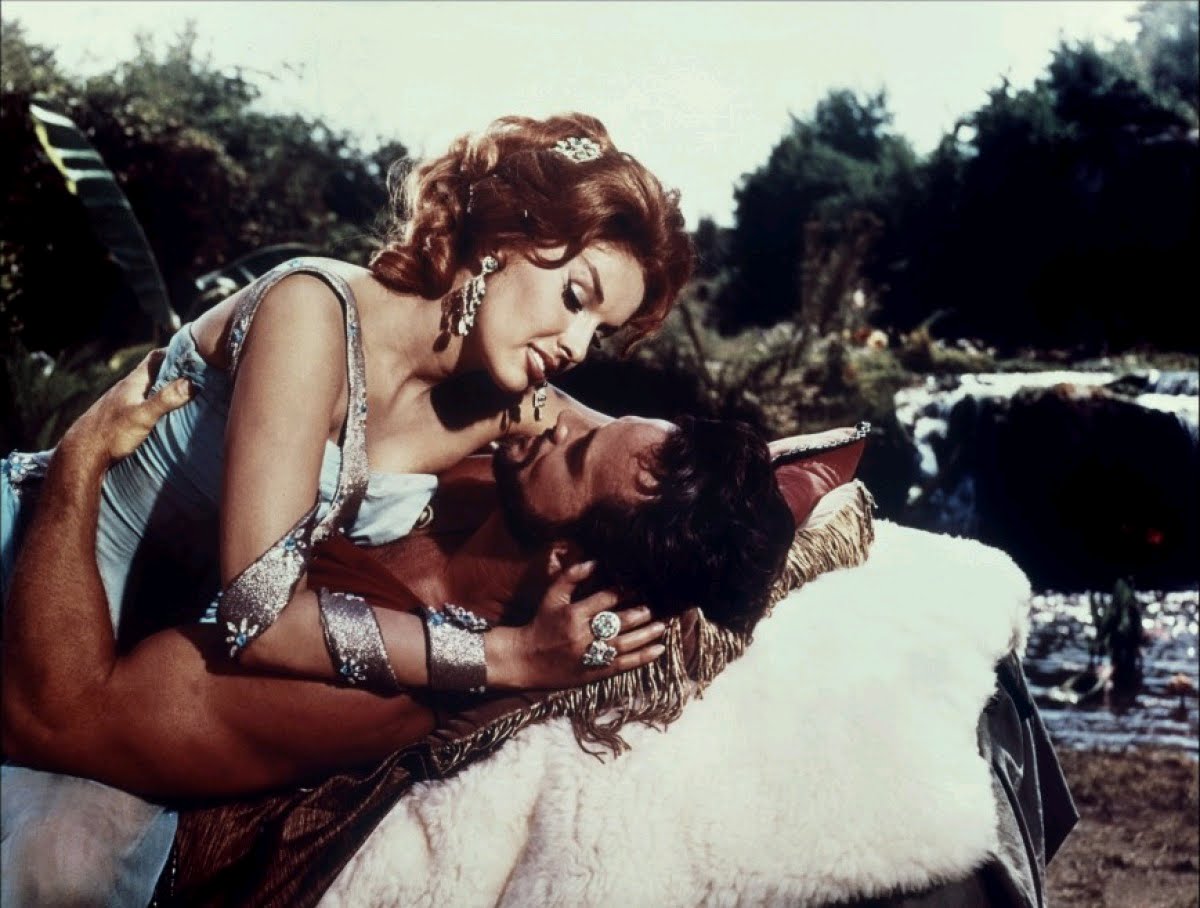
It's back to the peplum genre. To the time of ancient Greece where we find yet another adventure of our resident hero Hercules. This time, however, he's been rechristened Goliath and recasted to a new American bodybuilder named Mark Forest (real name Lou Degni) in his debut performance. Producer Joe Levine (Hercules/Godzilla) owned the rights to the name "Hercules", so this film's hero is now "Goliath". In addition to this, AIP even shot additional material with the help of the Italian crew. To prepare you or save you time, this film drops in the quality department about, oh, 25-30%. Those familiar with this genre should know this is nothing new. These films are replete with cheesy entries, assuring the MSTK and Something Weird Video folks stay in business for a few more years. This review ends up being more about the dubbed versions, as apparently the original negatives of the film were lost.

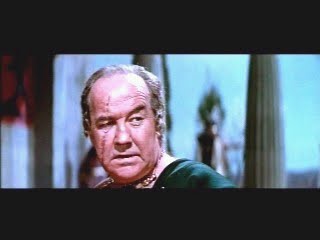
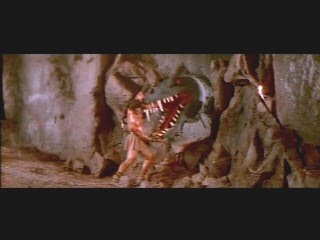
In this outing, Emilius the mighty (nicknamed the Goliath of Thebes or Pheobes but I will stick with Thebes) must find the blood diamond, which was stolen by King Eurysthesus a man bent on usurping Thebes for himself and killing Goliath. To accomplish this, Eurysthesus (played by Hollywood heavy Broderick Crawford) hid the blood diamond in the cave of horrors. The film opens with a rock cimbing scene, where we find Goliath has found the cave and no sooner battles what appears to be a fire-breathing Cerebus. If you haven't stopped watching after this laughable scene, we are introduced to the scar-faced Eurysthesus, who gloats like a Batman villian about his impregnable trap for Goliath. His counselor and allies want proof of Goliath's death before they take Thebes. Meanwhile, Goliath treks deeper within the cave to finds the skeleton of a man and the dragon who most likely did him in. Commanding him to continue on for the blood diamond, Goliath obeys the word of the pagan goddess.

Illus, Goliath's younger brother, secretly goes to meet with Thea who stays in the courts of Eurysthesus. He plans to return to meet her, but the soliders have another plan for him. Meanwhile, Goliath battles a Maurice Sendak looking Man-bat creature (i.e. expendable stuntman in a costume), just as he finds and secures the blood diamond. Back at the Eurysthesus' court, his shady counselor Tindaro (who strongly favors a 60's era Star Trek Romulan) plots to invade Thebes and soldiers capture Illus on his way out from sneaking kisses from Thea.

When Goliath returns home, he is disturbed to learn of his brother's intentions with Thea, as it was her father who killed his parents. Before long, Eurysthesus finds that this development can be used for his own plans to take over. He plots to have Illus poison Goliath, but the slave girl, Alcinoe, who he sent to do the job betrays him. Eurysthesus even goes so far as to wed Thea for himself. Eventually, Goliath's brother is abducted and snet to die under the foot of an elephant, that is until Goliath comes to the rescue. Things only worsen when they get a prophecy about his Illus ruling and a centaur kidnaps Goliath's wife Dejanira. He takes her to Eurysthesus, where he holds her captive in the cave of horrors. Ultimately, this typical peplum's convulted plot ends up making less and less sense the more you think about it. In addition to the bad special effects and laugh out loud scenes such as Goliath wrestling some dude in an unconvincing bear suit, this is still surprisingly entertaining.

There you have it. Another Velveeta-flavored peplum yarn. Well other than renaming the titular hero after a biblical Philistine villian, and having plotholes as big as the caves in this film, this film is something slightly enjoyable to watch. The cinematography is just bad, though you can tell they were trying to emulate Bava's style in select scenes. The low budget special effects have to be seen to be believed, and that's about it. "La Vendetta Di Ercole" is simply another Saturday afternoon matinee flick. Enjoy.

Friday, January 14, 2011


Hercule et la Reine de Lydie (Hercules Unchained or Hercules and the Queen of Lydia) (1959)
ITALY/ SPAIN --- fantasy

Dir: Pietro Francisci

In this direct follow-up to the 1958 film "Hercules", Steve Reeves returns for his second and final portrayal as the mythological muscleman Hercules. Also returning is the beautiful Sylva Koscina as Hercules' now wife Iole and Gabriel Antonini playing a young Ulysses. We catch up with the trio on a horse-drawn chariot en route to Thebes. They soon run into danger, when an arrogant brute harasses them with intent. Confronted by Hercules, they realize their tormentor is more than meet the eyes as Ulysses councils Herc that he may be Antaeus son of the Earth goddess. His defeat must come by his separation from solid ground, so Herc tosses him in a body of water nearby.

When they arrive in Thebes, Hercules finds the blind king Oedipus prepared for death. He has been dethroned by his two sons Eteocles and Polynieces, who agreed to switch off duties annually, but that agreement has soured as both plot to destroy each other by any means necessary. Hercules willing plans to intercede for the brothers in an attempt to restore peace on the land. His good intentions, however, are interrupted as he leaves Iole behind with Eteocles' camp to serve as messenger with Ulysses. En route, Hercules drinks from the waters of Lethe (one of the of the five rivers of Hades, being the river of forgetfulness), and is seduced by what sounds like Iole singing. He is lured to a ravine where he passes out, but Ulysses finds he is surrounded by soldiers. He wisely plays the part of the deaf mute, as they are captured.

The soldiers bring Hercules and Ulysses to the beautiful sorceress queen Omphale (played by French model Sylvia Lopez). When Herc awakens, he finds himself surrounded by a bevy of female servants and the queen swimming. He asks of Omphale his identity, as she tells him that he is king of the land and that she is his bride. Soon, Ulysses must help Hercules restore his memory before Omphale has him killed, by way of suspended animation. To make matters worse, the warring brothers are preparing to strike and the populace of Thebes are growing restless. Sending word for help by carrier pigeon, Ulysses finally does pull Herc out of the grasp of Omphale, with the help of the Argonauts. After they escape, Hercules and the group must get back to Thebes, and rescue Iole before bloodshed erupts.

"Hercules Unchained" is loosely based on the Aeschylus' "The Seven Against Thebes" as well as other various Grecian myths. Let me be honest with you. Of all the countries in the world to have a operating film industry, Italian cinema are on the bottom rung for me. The very fact that they refuse to record on set sound as a collective stylistic choice and most of their films are cheap ripoffs of Hollywood fare is just baffling to me. Having said that, all of this has its expected charms. Spaghetti westerns is a favorite sub genre of myself and many others, and I like even some of the esoteric films that most would not sit through. These Sword & Sandal epics are in the same boat. An good-looking imported American lead actor, a convoluted plot, and lots of action. That pretty much sums up Italian cinema in my opinion.

The cinematography of Mario Bava allows the viewer some eye candy besides the oiled-up men and scantily clad women. The musical interludes makes the film feel very dated and the dance sequences are pretty much designed for a popcorn/restroom break. Costumes and production design in general are once again admirable, and given the source material and locale, it should be. Unfortunately, as it goes for these films, this is top notch. Steer clear if your not an aficionado of Italian cinema, Greek mythology, or just plain old MST3K style films on a lazy Saturday afternoon.

Friday, December 17, 2010


Alphaville , une étrange aventure de Lemmy Caution (1965)
FRANCE --- science fiction

Dir: Jean-Luc Godard

cy·ber·punk (sbr-pnk) n.
Fast-paced science fiction involving futuristic computer-based societies.
cyber·punk adj.

The American Heritage® Dictionary of the English Language, Fourth Edition copyright ©2000 by Houghton Mifflin Company


Jean-Luc Godard's now classic French new-wave film, "Alphaville", did not coin the phrase cyberpunk, but it certainly influenced the science fiction sub-genre. The film is one of the quintessential examples of science fiction that works as a social commentary of the zeitgeist, yet somehow influences or predicts the future. It's a can't lose proposition. The more things change, the more things stay the same, no matter what year it reads on the calendar.

In true-to-form film noir, a raspy voice narrates our lone gumshoe's black-and-white adventure into the neon drenched night; and yet it doesn't. American actor Eddie Constantine portrays Lemmy Caution, a character Godard appropriates from author Peter Cheyney. Also of note, Constantine is revisiting this character like a pair of old shoes, much like Sean Connery to 007 (as of date he's played the character well over ten times). We find Caution, under the guise of Ivan Johnson, entering a seedy hotel where he hopes to find one his marks, a man named agent X21. X21 seemingly goes into cardiac arrest whilst meeting with a less than enthusiastic prostitute. He tells Caution Alpha 60 will self destruct from tenderness. He soon meets with a Natasha Von Braun (played by Godard ex-wife and director pet Anna Karina).

Natasha escorts Caution through the soulless city that is Alphaville. Under strict control of a super-computer designated Alpha 60, the denizens are devoid of tenderness and take no qualms in executing people with love and compassion. Caution is just in time for a formal gala at an Olympic-sized swimming pool that celebrates the execution of those who resist. Here, Caution sees his next mark, the sunglasses-clad Professor Vonbraun, (possibly a reference to renown rocket scientist Wernher von Braun) Alpha 60's creator. His interest attracts suspicion, and he's subsequently captured by Alpha 60's engineers and interrogated by the super-computer. The interrogation is unsuccessful as Caution dodges its questions with poetic answers that ultimately can not be interpreted by Alpha 60.

Being from the Outlands, Caution despises Alphaville with each passing discovery of its subjugation of basic human feelings. He grows fonder for Natasha as she begins to develop a forbidden relationship with him. Natasha rediscovers that the Bible (which is a name used for the dictionary), has much truth in it. She slowly learns things from the Caution like poetry and words that are outlawed that she once had much affection for. She begs for Caution to get out of Alphaville, and he does, but not before he completes his mission, and destroys the super-computer responsible for the mass repression of Alphaville.

"Alphaville" isn't a masterpiece of sci-fi cinema by any means. The French New Wave aesthetics were strictly flexible enough to invite the filmmakers to experiment outside of their comfort zone. Both Godard and Truffaut (who helmed the great Bradbury adaptation "Fahrenheit 451") tried their hand in the science fiction genre, but Godard didn't feel the pressure to erect expensive sets and production design to get a message across. This reason gives viewers of "Alphaville" a choice, as it can very easily come off as cheap parody. Godard deliberately used contemporary France in his futuristic essay, and concentrated less on the film noir tropes such as chiaroscuro cinematography or fast-paced witty dialogue. Opting for a minimalist style of static close-ups of faces, neon lights, familiar electronic noises, and shifting back-and-forth to a moving camera of human interaction, Godard successfully evokes an unnerving feel throughout the piece. Putting us in Caution's pov as he snaps portraits of emotionless women with serial-number tatoos. On top of this, conveying the central message of the film in showing us Alpha 60's binary logic driven society, and Caution's unpredictable behavior.

The character Lemmy Caution comes out of the hard-boiled pulp fiction novels of the past, but he's investigating a future imperfect. It is often funny to see the futuristic imaginations of fantasists back in the day. Some came shockingly close to accurate predictions, most did not. Robby the Robot is the best example of the latter. For what it's worth, this is an interesting if archaic look into man's fears of technology and the digital age we find ourselves in. Long before the works of William Gibson or films like "The Matrix", there's no denying the ever-changing relationship between man and machine, paper versus plastic, and the constant struggle we confront embracing the future over the past. The film outright message against communism and censorship through the use of machines was only a half truth. No one could have predicted the digital age and its allowance of freedom to be yet another frontier to tame. This film, however, stands as one of the early, silent screams before the storm of technological anxiety.

Friday, November 5, 2010


Der Himmel über Berlin (Wings of Desire) (1987)
GERMANY --- fantasy

Dir: Wim Wenders

What do we know of angels? Studies say most of the human population, no matter what their religion believe in some form of angelic beings. The Hebrew Bible has numerous appearances of angels, but with the exclusion of Death, only names three of them: Lucifer (aka Satan), Michael, and Gabriel. They are speckled throughout the Bible. Whether tasked with guarding the Garden of Eden, the rescue of Lot from Sodom & Gomorrah, or visiting Mary to inform her she will give birth to the messiah. The mysterious beings have obviously been a part of most ( if not all ) cultural societies, and all we can do is question the parts they play in the scheme of our lives.

The German director Wim Wenders takes a visionary notion of how angels might operate if our eyes were open to their plane of existence. In the film "Der Himmel über Berlin (aka Wings of Desire)", he attempts to humanize these beings going even further than most older fare such as "It's A Wonderful Life" or "Death Takes A Holiday". We see a couple of angels observe, report, and discuss the daily activities of humanity in West Berlin. Our story focuses on two angels. One is named Damiel (played by Bruno Ganz) who follows along humanity with an expression of curiosity, sadness, and longing. The other angel is Cassiel, who is more stern, serious, and exacting. In an early scene, the two meet in a bmw dealership and discuss their observances of the day. It is a scene filled with light banter of the idiosyncrasies of mankind, something that Kevin Smith will kind of repeat in his film "Dogma".

As the two float among the city streets of Cold War era Berlin, we see an almost documentary style collection of people accompanied by their random voice-over track thoughts. Children are the only ones our angels are visible to. All is so routine to Damiel, as he longs to forsake his spirit form, and spend time to be corporeal. This is even further supported by his falling in love with Marion (played by the late Solveig Dommartin), a lithe female trapeze artist working at a circus.

While Damiel seems enamored with the joy and love of people and children, Cassiel seems more involved in those darker aspects of humankind. In particular, a geriatric gentleman by the name of Homer, who waxes poetic about the old Berlin. Though this character isn't a curmudgeon. Nor is the other older character, played by Peter Falk as himself. In the universe of this film, he is also an ex-angel named Compañero. Throughout the film we see Damiel slowly become seduced by Marion the trapeze artist and the colorful energy of humanity. Cassiel, however, sees the remorseful introspective poet Homer and the nightmarish horrors of humanity. Wenders often throws in the occassional documentary footage to ground us in this reality. The second half of the film follows Damiel and his journey in the flesh as he seeks his lovely flying trapeze artist.

"Wings of Desire" does indeed seem a microcosm of time passing before us. Converging on the middle ground of what was a divided wall separating East from West, color and black-and-white, love and death, etc. Overall, it retains a childlike perspective, but is most certainly of its time, as the graffiti-adorned Berlin wall would fall just two years after the release of this film.

As far as angels goes, as a Christian, my personal belief is that most angels have very specific instructions. There must be a militaristic hierarchy of some order, and the orders come only from the Lord. This movie curiously has an absentee God. I also believe at some point angels had or have a free will. Depending on your view of context of time, Revelation 12:4 states that Lucifer took a third of the angels with him when he was cast out of heaven. So if these beings were under some form of involuntary slave-control of the Lord, why or how could Lucifer himself defy God and how could the others follow? The answer is free will.

So it would seem "Wings of Desire" is not completely off the beaten track. Whether we like it or not the film takes a romantic look at what would otherwise be deemed horrific. Damiel is essentially a fallen angel, and we've seen films take a darker approach at that idea; "The Prophecy" being one. Wim Wenders' fantasy, of course, is far better than the Hollywood remake "City of Angels". The film's black-and-white cinematography is top notch, in the hands of Henri Alekan, who also shot Jean Cocteau's "La Belle et la Bête". It is directed with a finely tuned eye for composition and form. Taking advantage of Berlin's unique artistic aesthetic and creating poignant shots for visual consumption. In an early scene, you can see Damiel standing in front of plants, but in the shot it looks like his wings. All in all, one of the better films exploring what angels must think of humanity, even though it has the forced romantic trope.


Thursday, April 2, 2009

Le Ballon Rouge (The Red Balloon) (1956)
FRANCE
--- fantasy

Dir: Albert Lamorisse

I first saw this film like many people my age did, in school. My viewing was caused by either a snow day or rainy day during recess in Elementary school, and the staff stuffed all of us kids in an auditorium to watch Tom & Jerry, Looney Tunes, Woody Woodpecker, and Pink Panther cartoons. Somewhere in the mix, they showed the Albert Lamorisse short film Le Ballon Rouge (The Red Balloon) and till this day I have never forgot it. It has stayed with me.

The virtually silent film that runs about a half hour is simply about a boy’s journey around his neighborhood in Paris, France. In tow he has a sentient helium-filled bright red balloon that he carries on a string. Everyone he meets is enchanted by the boy and his balloon. Most of the adults react with a smile, but some adults seem like their hearts are too hardened and try to get rid of the balloon and separate the boy from it. However, at the end of the day, the boy prevails with his balloon by his side like a pet.


He takes his floating friend everywhere he goes seemingly bringing wonder and curiosity to everyone he encounters. The only antagonists in this film appear to be a mass of neighborhood school boys who persistently try to capture the red balloon for themselves. Their intent does not seem to be as affectionate as its owner. In a climax that feels every bit like The Lord of the Flies, the boys do get the balloon and puncture it with rocks and slingshots, virtually destroying the little boys' friend. Until, that is, all of the balloons in the city congregate to find the boy, and lift him up over the city.

Again, I bring up the film motif of the Alien Visitor that can be most visible in films like Steven Speilberg's E.T. The Extraterrestrial and John Carpenter's Starman. A lonely boy from a seemingly single-parent home makes an alien friend, shows him the world, and is antagonized and destroyed by authorities or those who simply do not understand. Yes, the finale of the film, is most certainly allegorical of a Christ-like resurrection. The film also feels like your a voyeur watching a personal home movie, or bordering on documentary style. Beautiful simplistic cinematography shines throughout. It stands to reason why the film has had a lasting impression with children and adults who connect with the child at heart.