Showing posts with label Australia. Show all posts

Friday, November 18, 2011


Mad Max 2 (The Road Warrior) (1981)
AUSTRALIA --- science fiction

Dir: George Miller

Has humanity ever been optimistic of the future? My answer is a resounding NO. Utopian futures in all sparks of imagination has never really been explored in literature, film, or even religious beliefs. Most religions don't view this earth as a place that can be redeemed. Most revolutionaries and dictators with Utopian ideologies were bent on bringing their reigns about through devastation. Wherever a idealistic future is depicted  their is still another darker side to it. Logically speaking, for every utopia must be a dystopia for someone. In the "Mad Max" series, the only ones enjoying the desolate future are the ones of complete moral decay.

Quite possibly one of cinemas very best sequels, writer/ director George Miller's "The Road Warrior" doesn't just repeat the same old story from the original film, it extrapolates on the theme of the dystopian future that eventually deteriorates into a completely blasted wasteland. In the previous film, "Mad Max", we had a glimpse into an uncertain future that clearly wasn't very comely, and was in such disrepair our hero became something of an anti-hero just to survive. Now catching up with him after the horrific life-altering events of the last film, we find Max Rockatansky a lone drifter and a shadow of the man he was. His only companions is a loyal Shepherd dog (I believe may have been the puppy from the last film), a two-gauge sawed-off shotgun, and of course his suped-up Interceptor which is no longer the shiny black vehicle of the last film but a dusty sun-bleached vehicle that looks just as worn-out as its owner. He isn't alone for too long, however, as his ever-present biker adversaries appear very early on in the film, and are just as much a threat as they were in the last film.

He has a very short confrontation with the biker gang when he scavenges some fuel from a wrecked vehicle, but the encounter ends in peace. To add to the collection of allies, the film throws in another player. When Max spots a one-man gyro copter on the side of the road, he approaches it in hopes of siphoning some fuel. A quirky drifter (played by veteran Australian character actor Bruce Spence) gets the drop on him, but Max quickly turns the tables. The gyro captain reveals that he knows where to find an entire refinery of gasoline in a fortified compound of men and women fighting of the biker gangs. Max agrees to let him live if he leads him to the compound. When they arrive on a mountaintop overlooking the makeshift fort held up with around thirty individuals, Max stakes out the area to observe an opportune time to get to the oil without alerting the gangs. He and the gyro captain witness the biker gang ruthlessly kill some of the inhabitants who tried to escape, Max heads out to save just one as his entry into the compound. They obviously distrust him and see him as a threat, until the marauders and their muscles-bound leader Humongous gives them an ultimatum. Max sees the makeshift community, which includes a resourceful burrowing feral child with a razor-sharp boomerang could use some assistance. He offers to help the group in exchange for a full tank of gas for his car and whatever he can haul with him.


He goes on a night-bound mission to get them a truck to haul an oil tanker out of the compound, and meets up with the gyro copter captain again. On a very dangerous and breakneck drive back to the compound, due to him being atacked by the marauders just miles within destination, Max makes good on his deal. He then later goes back on the road on his lonesome, and is once again attacked by Humungous' ruthless biker gang, destroying his car, and leaving him for dead in a scene which mirrors the ending of the first film complete with a biker gang member adorned in a highway police uniform. The gyro captain rescues him, and takes him back to the compound, where they come up with a last ditch effort with their gasoline, and Max comes in as a good Samaritan one last time.

In this film, Mad Max becomes more of a mythic hero than a one-dimensional vengeance seeking man above the law. The law clearly has failed him, and in this film, George Miller clearly takes his cues from American Westerns such as "Shane", "Fort Apache", and of course "Fistful of Dollars" and it's Samurai progenitor "Yojimbo". No such flavor is wasted in this film, as Miller raises the mythic level by adding inspiration from Joseph Campbell's "Hero With A Thousand Faces" (a book Miller says he read between filming Mad Max and this film). Multiple storytelling techniques are added to make the character of Max Rockatansky much more fleshed out, if by only fleshing out the characters surounding him such as the gyro captain, the feral child, and the community within the compound. George Miller continued his "Mad Max" trilogy with "Mad Max Beyond Thunderdome", which concentrated specifically on what the first two films had been hinting at, the future is in the children.

Though, the entire trilogy has one giant flaw in the fact they have nary a hint of Aborignines. Oh sure, the children in the third film even look like they're painted to be Aborigine, but they are not. So, it makes you look at the films with another eye, in wondering if the film is about the fears and regrets of Anglo-Colonization rather than a fear of nuclear destruction as other films. Interestingly enough, John Carpenter's "Escape From New York" was released the same year, but "The Road Warrior" kinda had a chance to be about more than that. In one of the undercurrent themes of the film, Max represents a lone anti-hero, cynical enough to not really want to get involved in the last vestiges of what appears like the human race or a decent community. On the outside is everything that goes against community; men on motorcycles (since "The Wild One" and "Easy Rider" a symbol of rebellion), men with men as sexual partners (homosexuality, this was actually brought out in the first film but has even been alluded to more bluntly in copycat films like "Warriors of the Wasteland"), and the lack of starvation not so much of food but gasoline, (the precious juice as the narrator once put it), which fuels our crutch of machines. Miller is supposed to return to the Mad Max universe with "Mad Max: Fury Road", which we will wait and see what Max will get into this time.

Friday, May 20, 2011


The Last Wave (1977)
AUSTRALIA --- fantasy

Dir: Peter Weir

Peter Weir’s “The Last Wave” is a laconic explorative fantasy with very mild supernatural elements. Like Richard Stanley’s “Dust Devil”, another white male director living in a foreign land delves into the dark side of the indigenous culture of his homeland, in this case the Australian aborigines. The film involves a Sydney lawyer, David Burton, (played by the melancholic yet philosophic Richard Chamberlain at the height of his career) who takes on a case involving “city dwelling” Aborigines who are accused of the murder of one of their own. Their own tribal laws do not apply within city limits, and anything that seems deemed as such will be subjected to new law of the land. The thing is; the death is somewhat mysterious as it looks like it was a tribal situation (no tribes are allowed in the city). The mystery lies in the fact that the victim died of drowning on land. The aborigines remain mum and are completely uncooperative about everything, whether they are tribal or whether they know anything about the murder. The other thing is, there’s been an unusual amount of rain as of late, so much so that even those who don’t believe in Australian aboriginal myths or prophecies, which foretell the apocalypse happening, are skeptic.

What’s happening to the city, however, is nothing compared to what’s happening to David. He’s having strange delusional visions. Nightmares and haunting hallucinatory blackouts remain unexplainable, until he delves further into the fact that the city dwelling aborigines on trial are indeed tribal. He even dreams of one of his clients that he has yet to meet. Chris (played by probably the most famous working aboriginal actor David Gulpilil) , who’s a younger member of the tribe, was envisioned by David holding a tribal stone with blood on it while standing in his dining room. To make matters worse, at a dinner meeting with Charlie (who’s the leader of the tribe) and Chris, David learns that he himself may be the reincarnation of an aboriginal sun god, called Mulkurul. David becomes all too interested in this strange probability. Knowing something of his own ancestral background and his current affair with not knowing dream from reality, David knows full well the defendants did murder one of their own in a ritual.

His only friend in all of this ends up becoming Chris, who warns David that Charlie is not only the tribal elder, but also a powerful sorcerer. The vision was a warning, David eventually learns, as all the answers are given to him in one way or another. The rain continues to come down from torrential spells to black soot. It’s this that David has to question his own identity. David ultimately is lead by Chris to a sacred tribal area belonging to Charlie’s tribe. The sacred grounds can be found under Sydney’s water system as David discovers the prophecy of “the last wave” written on the walls and confronts Charlie the tribal shaman.

Weir’s “The Last Wave” is a very heady film, as it really is one of those films you don’t take on face value. It’s a lot in relation to one of Weir’s later films, “The Truman Show” (Not to mention the subject matter of Witness), where coincidentally water also seems to be a pivotal story element. The Australian Aborigine myth about the “dreamtime” states this was the time of earth’s creation, done by a rainbow serpent. The apocalyptic prophecy states that there will be a massive tidal wave from the Pacific Ocean that will wipe out the entire continent of Australia. Ponder Thailand and more recently Japan’s deadly tsunamis and earthquakes for a moment? There’s a reason for the characters interpretation of each other in this film that is the most important facet of all. As they deal with the duality within themselves. They are up against the greatest challenge any individual must face, the simple quest of self-identity, as Charlie in the film does ask David, “Who are you?”. I look forward to a Peter Weir film as most of the time they deal with a man challenging something bigger than just another man or some bad relationship, they deal with challenges that we all would have to question our own path.

Friday, January 28, 2011


Mad Max (1979)
AUSTRALIA
--- science fiction

Dir: George Miller

Dystopian futures are an easy sell for audiences. They are the one of the best uses of the science fiction genre, as a signpost to the dangers of not only where society is, but where we are headed. Within this sub genre we've had classics. Coming out of the 60's where threat of nuclear war was as imminent as visible storm clouds on the horizon, many filmmakers steered clear of the Totalitarian or Communist messages (such as "Alphaville", "Logan's Run", or "THX 1138") and more toward a believable future oblivion. These futuristic visions would spotlight a decayed complete collapse of any structure whatsoever. George Miller's "Mad Max" begins here.

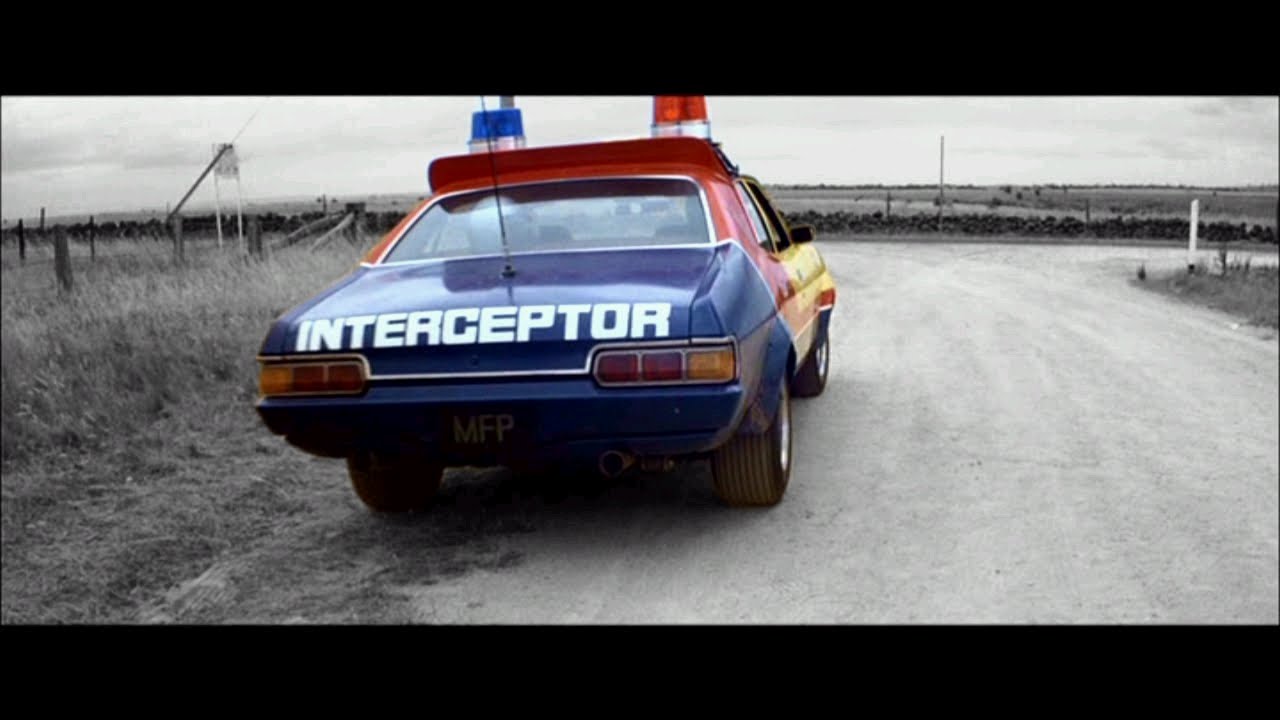
The "Mad Max" trilogy (soon to be expanded with a sequel) has the unique distinction of chronicling the decay of a society. This first film is simply dystopian future of specific date, where outlaw biker gangs and psychopathic drivers roam free on the highways of Australia. The police force, while seemingly sparse, still manages to enforce law and order. Our introduction to this bleak future is through a patrol car tasked to take down a violent AC/DC-quoting driver who calls himself "The Nightrider"; a character straight out of a Carsploitation film. When the patrol vehicle is totalled during a harrowing high speed chase, the hero of our tale emerges; Max Rockatansky (played by a young and relatively unknown Mel Gibson). His Main Force Patrol vehicle appears to be a standard yellow, blue, and red, but the other vehicle had a code emblem of PURSUIT, and Max's has one V8 INTERCEPTOR (a converted Ford Falcon). This is the same vehicle that will turn up in the sequel, except it will be painted black, much like the "Nightrider".

"Nightrider" doesn't turn out to be much of a threat when Max catches up to him and his girl. They end up crashing and destroying their vehicle, and Max is saluted for his fine job of taking out the maniac. We're taken to Max's home life where we see he's a new father. It also is apparent he's a reluctant hero, who isn't so comfortable in his celebrity status. Soon we're also shown Max's car in the shop, being prepped by a mechanic to suped-up capabilities. Also, the politics from the insides of the "Halls of Justice" don't really even care to celebrate Max's contribution to the force, as we learn that isn't prone to staying a cop. Max's superior informs him a new foe has emerged from the "Nightrider"s death, when a biker named "Toecutter" (played to the hilt by a convincing Hugh-Keays Byrne) rears his ugly head with his gang in tow. They just as soon declare vengeance against Max and the rest of the MFP. To cement their threat, the gang molest a young couple outside of town and Max and his partner biker The Goose get called to respond. The damage is done and the gang is long gone, but they leave a one of their own behind, in a delirious Johnny the Boy spouting the same insane rhetoric about "Nightrider", allowing Max and The Goose to put two-and-two together.


They arrest Johnny the Boy, but after having him locked up in the shanty headquarters of their police station for awhile, the bureaucratic system releases him when no one shows for his trial. The Goose gets irate over this mockery of justice, and wants to take Johnny the Boy apart himself. The officers, still in disbelief watch as he is set free on the streets, but their superior allows them the officers to do whatever necessary so long as it's on paper. We soon see as Johnny the Boy returns to "Toecutter", he has to pay for his release, with the blood of one of the officers. So Johnny the Boy is coerced to go after the Main Force Patrol, and he targets The Goose. When The Goose is burnt alive and left for dead, Max goes on a temporary sabbatical in the country with his family. They enjoy the open freeway and head toward the beach where they visit with a family member. Unfortunately the solace is cut short when the "Toecutter"'s gang harrass Max's wife and child, and later hunt her down ultimately killing both. Driven to madness, Max takes matters into his own hands, taking his new INCEPTOR out of the shop and hitting the road with only one thing in mind . . . revenge.

Filmed on the very desolate outskirts of Melbourne, Australia, "Mad Max" is a film that came at a time in the Seventies when cinema was all about exploitation of all kinds. They ramped up sex and violence, and skewed toward fetish-esque niche markets like Blaxploitation, slasher films, revenge epics, carsploitation films, you name it. Mad Max fits in a couple of those sub genres quite nicely. The score was supplied by composer Brian May, that effectively amps you up with the roar of the engines and screeching of tires. It became a hallmark of Australian cinema. In the end film is a dark commentary on the anxiety of the late Seventies and the changing cynical outlook of our future. Borrowing from the influence of George Lucas' uber-successful "Star Wars", with the use of Joseph Campbell's 'Hero With A Thousand Faces' (as well as the swipe transitions in editing), Miller creates a new mythological hero in Max. Having placed a broken man in an equally broken society. With a dystopian landscape, Miller would soon help pave the way for the next decade in a slew of post-apocalyptic films, that were not only inspired by this film, but its sequel.